01Case study · Sleep & wellness
Unora
A student sleep-transition companion — because the hard part isn't sleeping, it's putting the phone down.
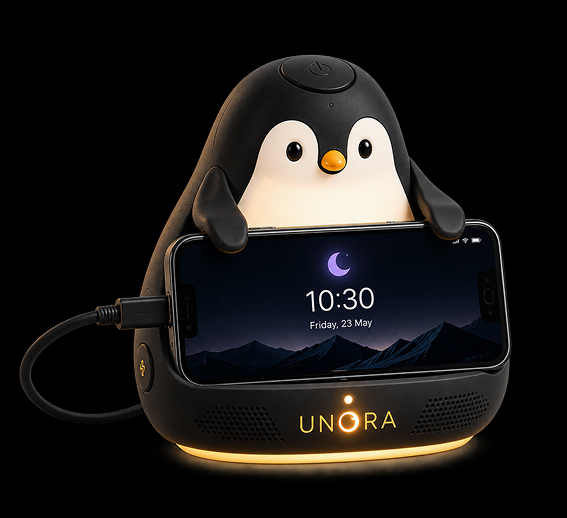
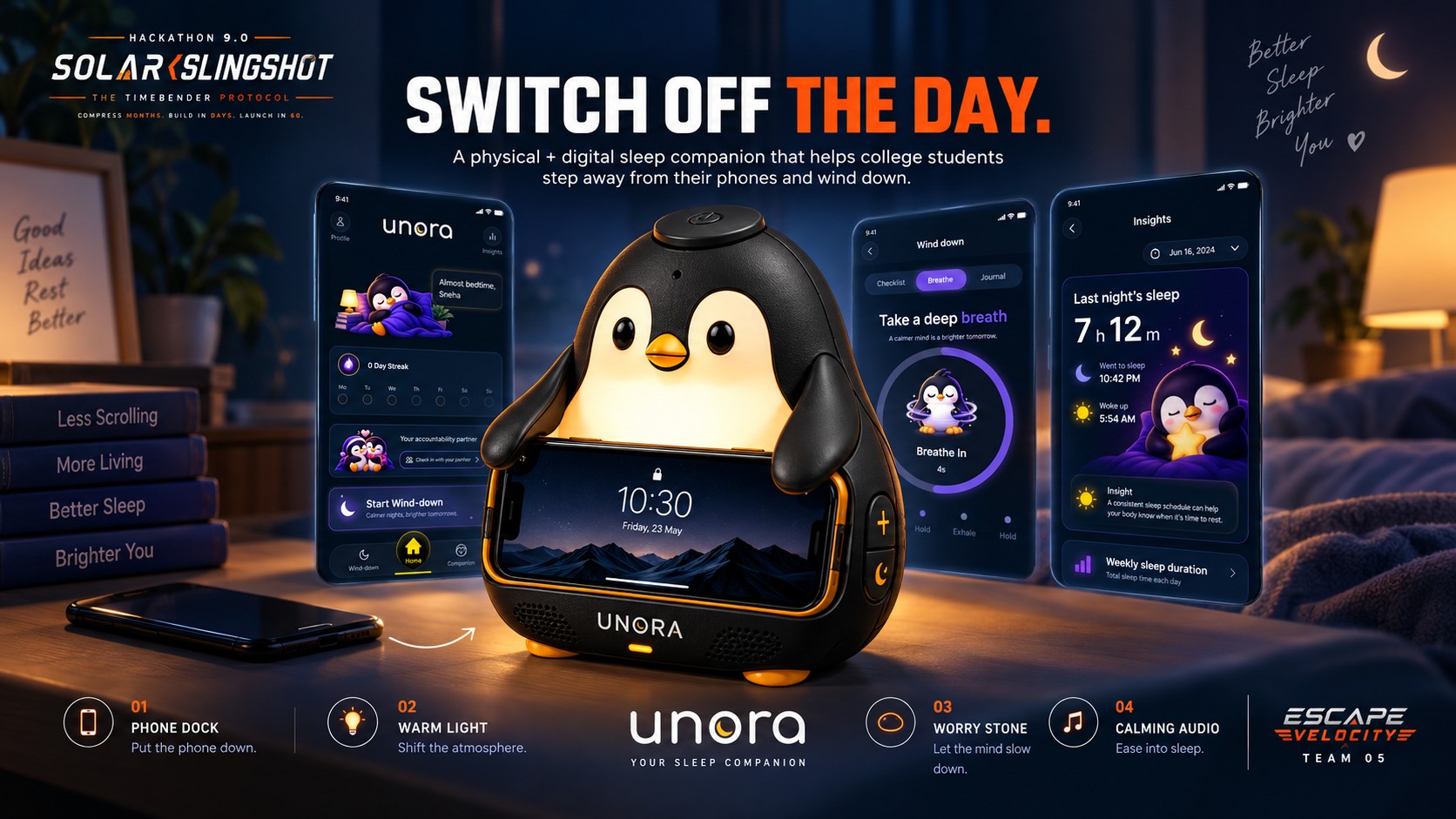
A bedside phone dock and ambient lamp, an app that guides one calming action, and Nora the penguin. Built over 60 days with Team 5 — Escape Velocity for Solar Slingshot Hackathon 9.0.
- Phone
- Dock
- Disconnect
- Calm
- Wind down
- Sleep
- Role
- Product Designer
- Duration
- 60 days
- Team
- Team of 5 — Escape Velocity
- Domain
- Sleep & wellness
- Type
- App + physical product
- Context
- Solar Slingshot Hackathon 9.0
- Deliverables
- Research, concept, UX architecture, UI, prototype
- Tools
- Figma, FigJam, AI-assisted clustering
02The problem
Students know they should sleep. Their phone wins anyway.
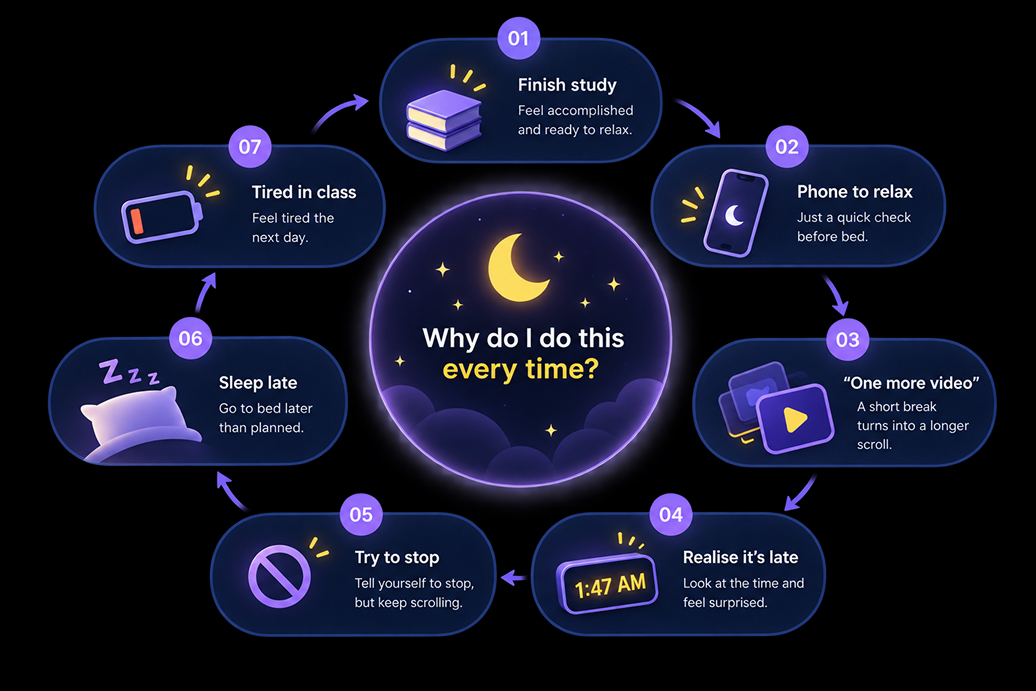
College students delay their intended bedtime because they keep scrolling. Existing sleep apps track sleep after it goes wrong, but none help students put the phone down.
The core problem is not a lack of awareness. It is the gap between wanting to stop and actually transitioning away from the phone.
01
I should sleep
02
One more thing
03
Phone becomes the default
04
Thoughts stay active
05
Sleep gets delayed
03Snapshot
The project in four lines.
Situation, task, action, result — before the long version.
Situation
A 60-day hackathon brief on student wellbeing
Task
Design for the transition, not the tracking
Action
Research, 80+ ideas, one hybrid system
Result
A tested-by-critique concept, not a proven product
04History
Where the idea started.
The brief was student wellbeing. Sleep was what students themselves raised first — and the reason they gave was always the phone.
Observed
Awareness was never the gap
Observed
Sleep apps lost them
Decided
Design the decision moment
05Geography
We went where students actually are.
Library and mall intercepts in Nagpur, contextual interviews at home and in hostels, plus expert interviews with medical students. Our persona is a day scholar in Pune.
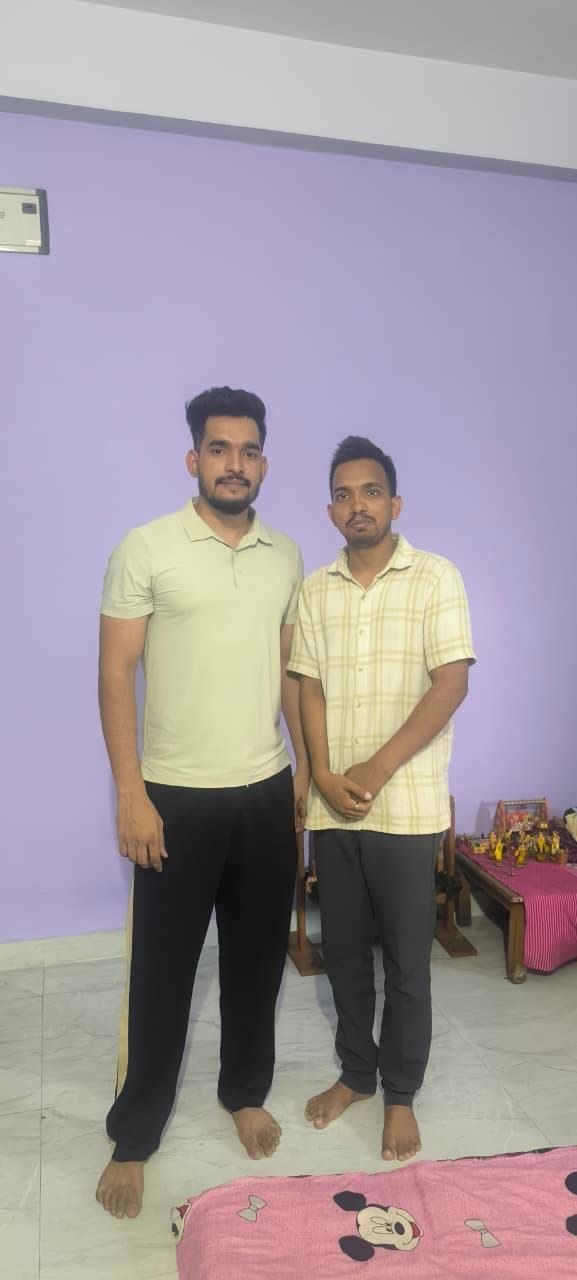
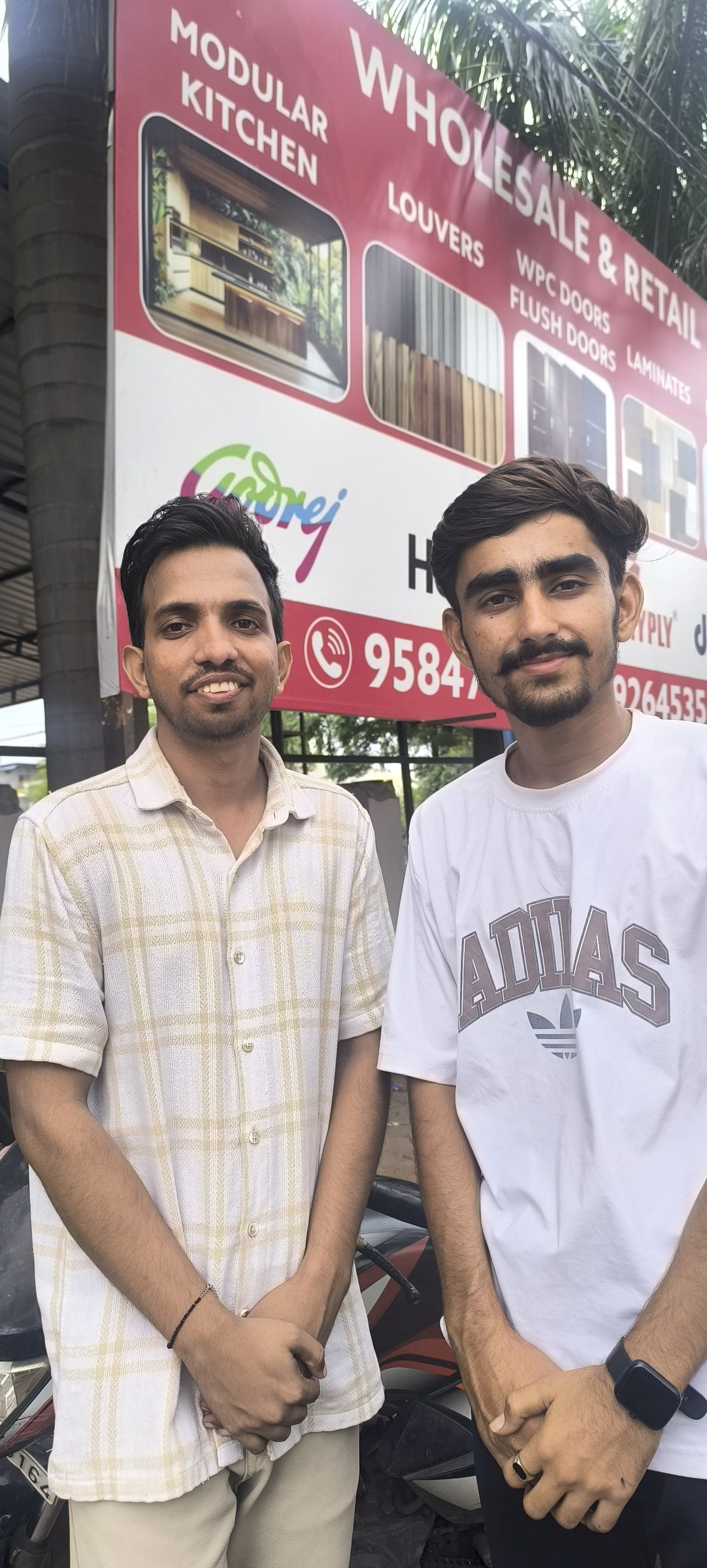
Photos from our own fieldwork. Participant names beyond the quotes below are not published.
06Research
Out of 200 students, most told us the same story.
A survey, field intercepts, contextual interviews and expert interviews all pointed to one gap: awareness never became action.
“If you could improve one thing about your sleep”
- Schedule & consistency15
- Digital habits12
- Mental well-being7
- Environment & quality6
- Scrolling and videos were the most common pre-bed activity.
- Sleep drops below 5 hours during exams.
- Most had never used a sleep app; those who did lost interest.
Note on numbers: our documents report the survey reach differently in places (55–65 students). The exact sample needs confirming before this figure is quoted anywhere else.
“I know my sleep schedule isn't good, and I want to improve it.”
“Sometimes I overthink, and because of that I can't sleep.”
“Now children stay awake longer because of mobile phones.”
07Research → opportunity
Five pain points, five How Might We questions.
We mapped the journey, identified pain points at key moments, and used AI-assisted clustering to group recurring pain points into themes. Those themes became the five we prioritised.
Pain point 01
Struggle to disengage from phone entertainment.
Pain point 02
Struggle to mentally switch off from academic work.
Pain point 03
Experience daytime tiredness and reduced concentration.
Pain point 04
Struggle to turn awareness into behaviour change.
Pain point 05
Return to phone use when unable to sleep.
How Might We — ranked by team vote
- 1Help students follow through on putting the phone away when bedtime slipsOur focus
- 2Turn that intention into a consistent habit
- 3Remove the mental load of pending academic work
- 4Help students settle back to sleep without the phone
- 5Help students sleep enough to feel rested
Coach the behaviour in the moment — don't just measure the outcome the next morning.

08Biology — the person
Meet Ananya, the bedtime phone scroller.
20, B.Sc. 2nd year, day scholar in Pune. She plans to sleep by 11 PM, but reels and web series push her past midnight.
I know I should sleep earlier, but my phone always wins at night.
Goals
What she wants
- Sleep on time, wake refreshed
- Reduce late-night phone use
- Better focus in class
Pain points
What gets in the way
- Scrolls even when sleepy
- “Just a few minutes” stretches on
- Guilty next morning
A typical night
Planned 11:00 PM · actual 12:00 AM+
Needs
Gentle, not preachy
09Physics — the moment
Every product measures sleep. None stops “one more reel”.
Tracking acts in the morning. Relaxation apps act during wind-down — but the phone is still the device delivering them. The transition moment was empty.
Track
Morning / after sleep
Relax
Before / during wind-down
Unora
The transition moment
Dock + disconnect + tactile + light + audio + adaptive guidance.
From our market research synthesis: no mainstream consumer sleep product in the reviewed set specifically addresses late-night phone habits and bedtime transition.
10Chemistry — needs → response
Every major need maps to a deliberate experience choice.
Nothing in the product exists without a corresponding student need behind it.
01
A clear stopping point
02
A calmer transition
03
A place for thoughts
04
Support without judgment
05
Simple guidance
06
Understanding over scoring
11Ideation
Nine methods, eighty-plus ideas, one system.
Each member generated ideas before the team clustered them. These are the boards exactly as we made them.
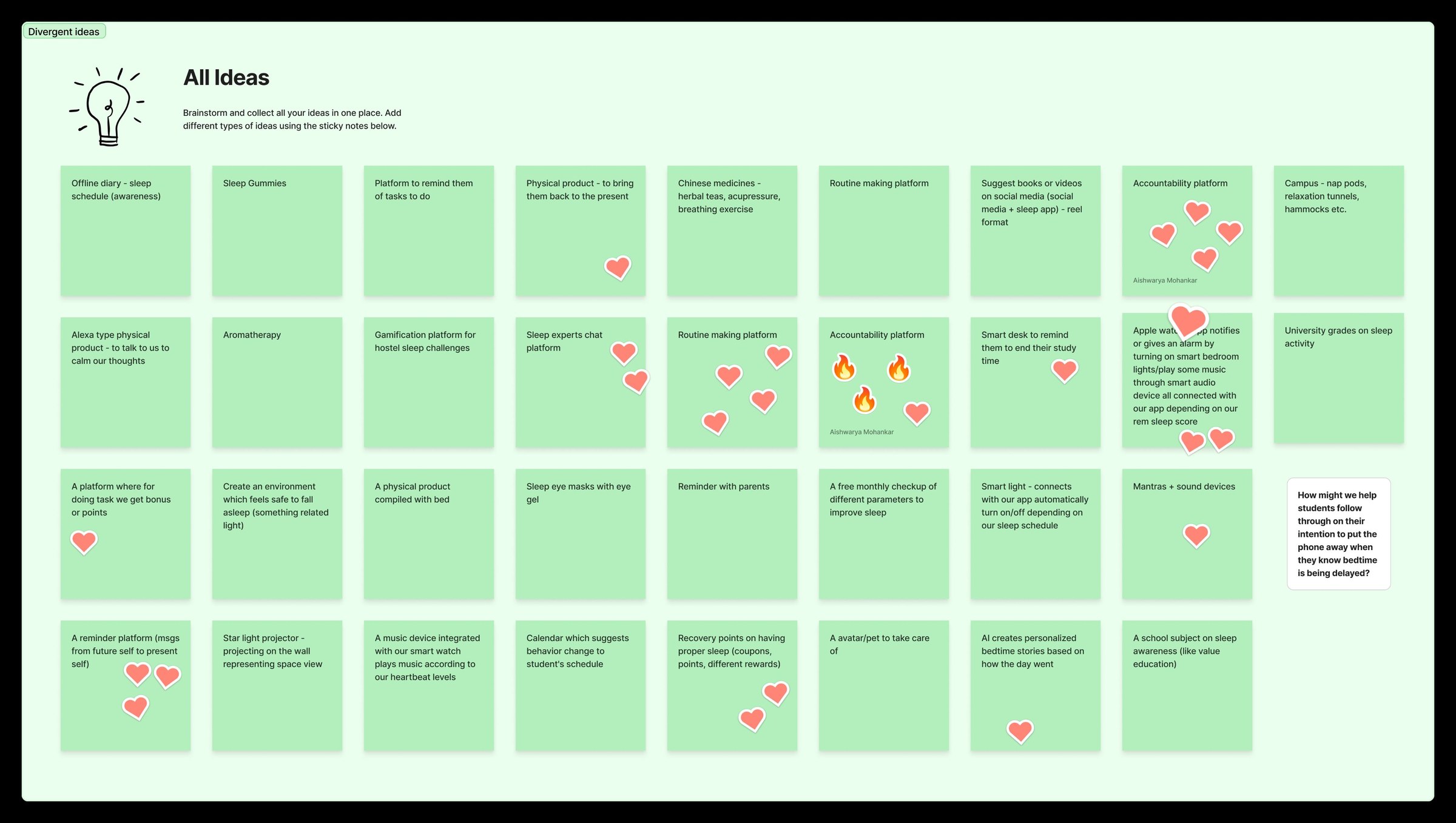
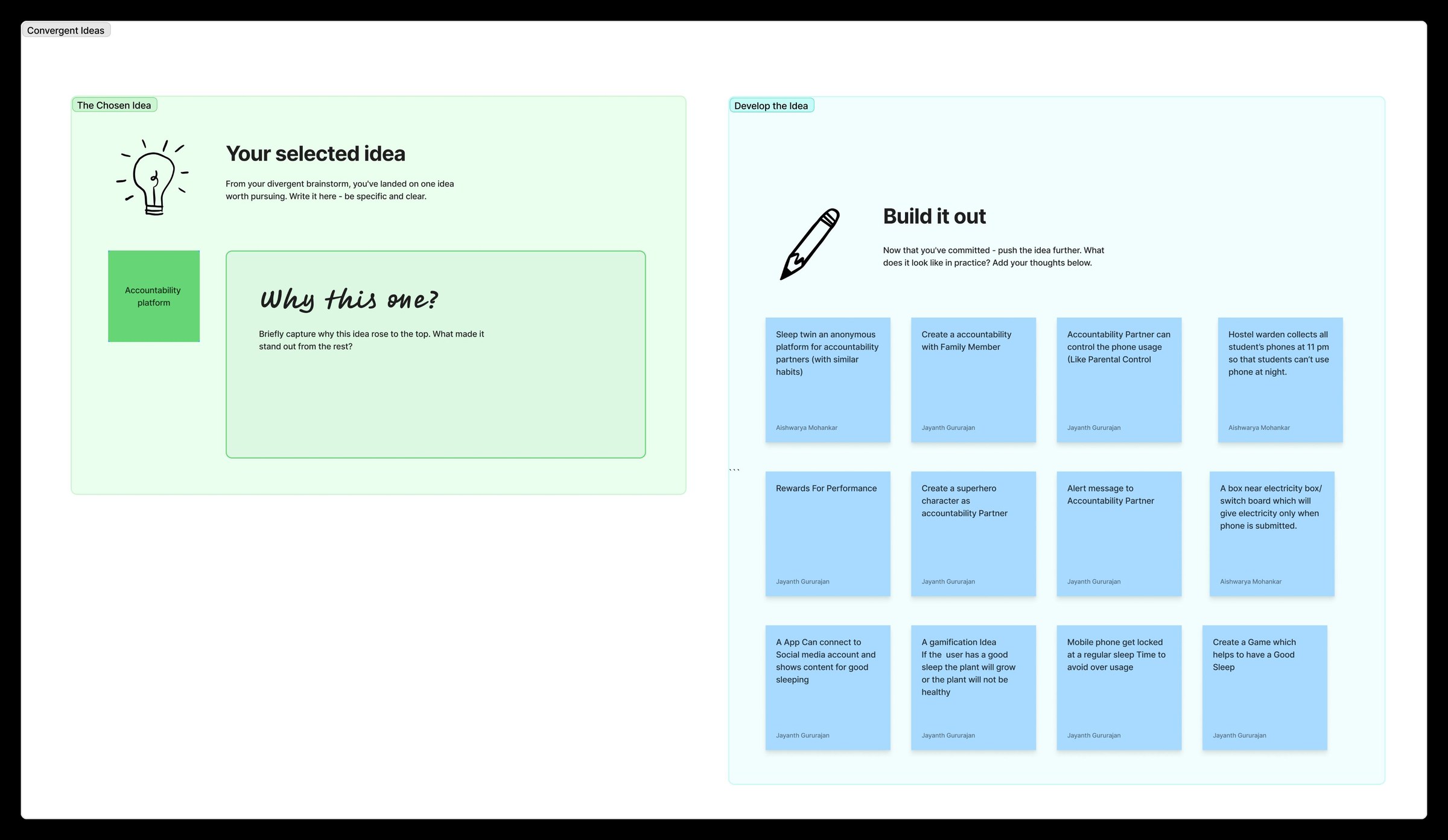
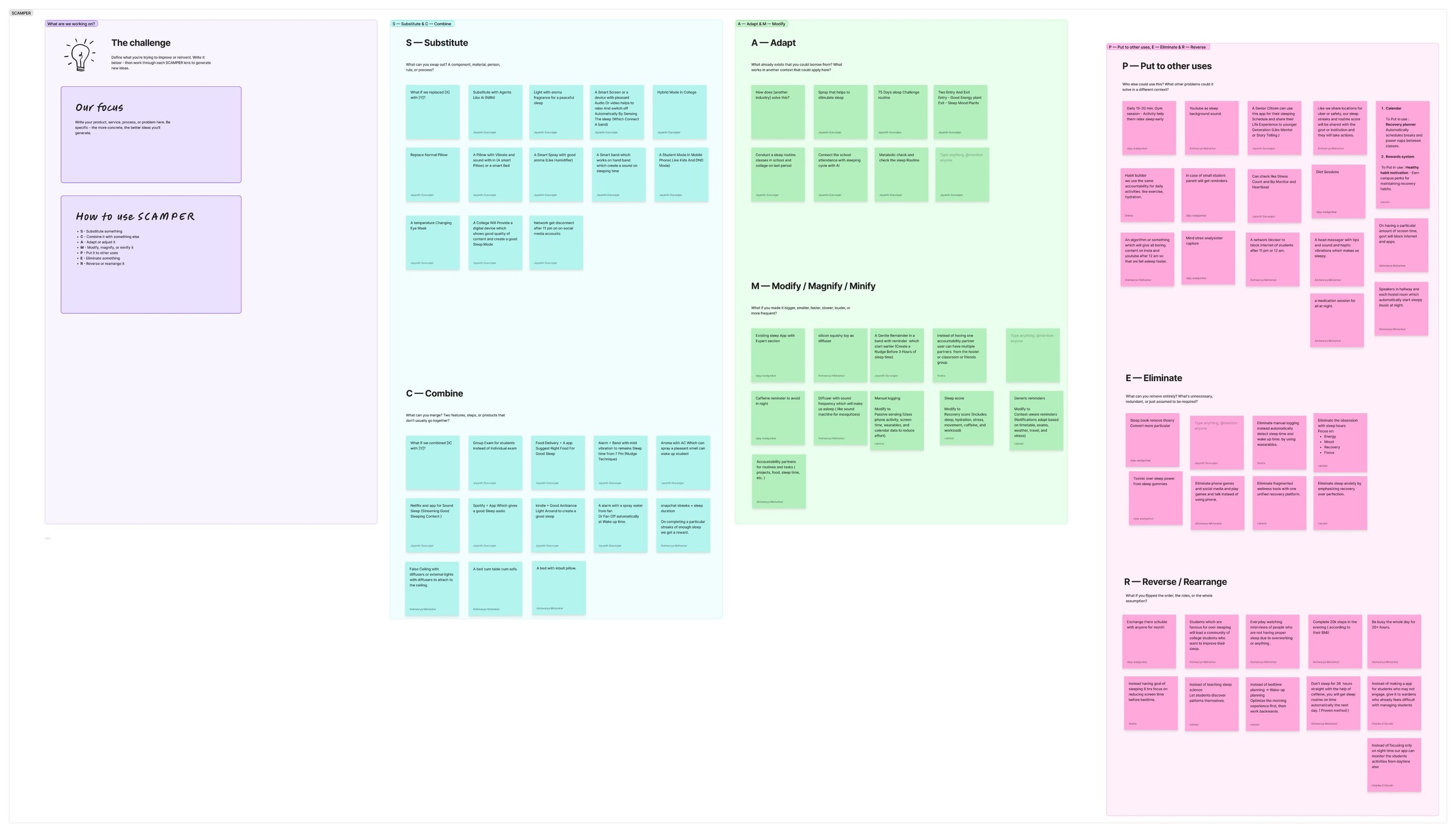
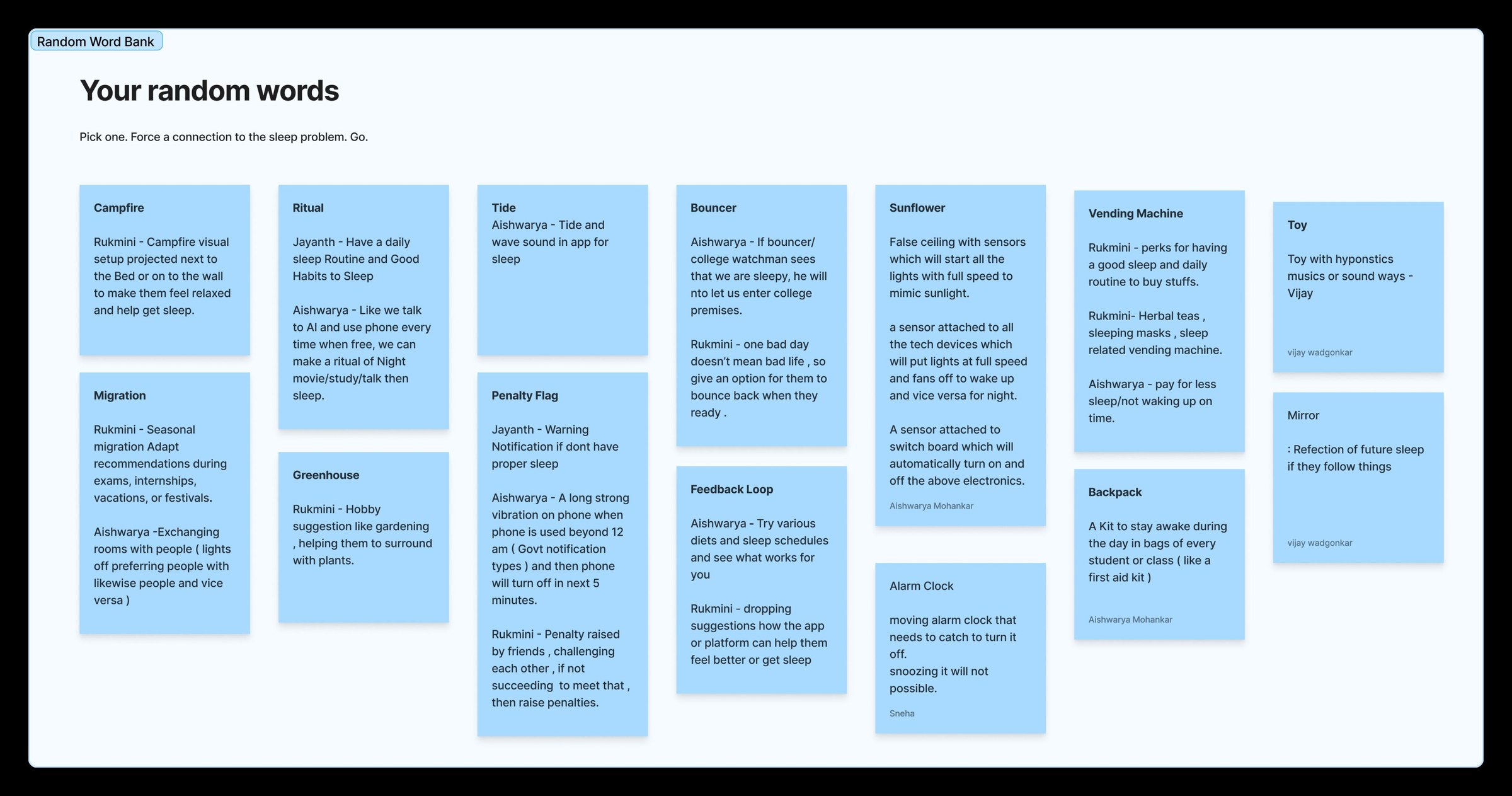
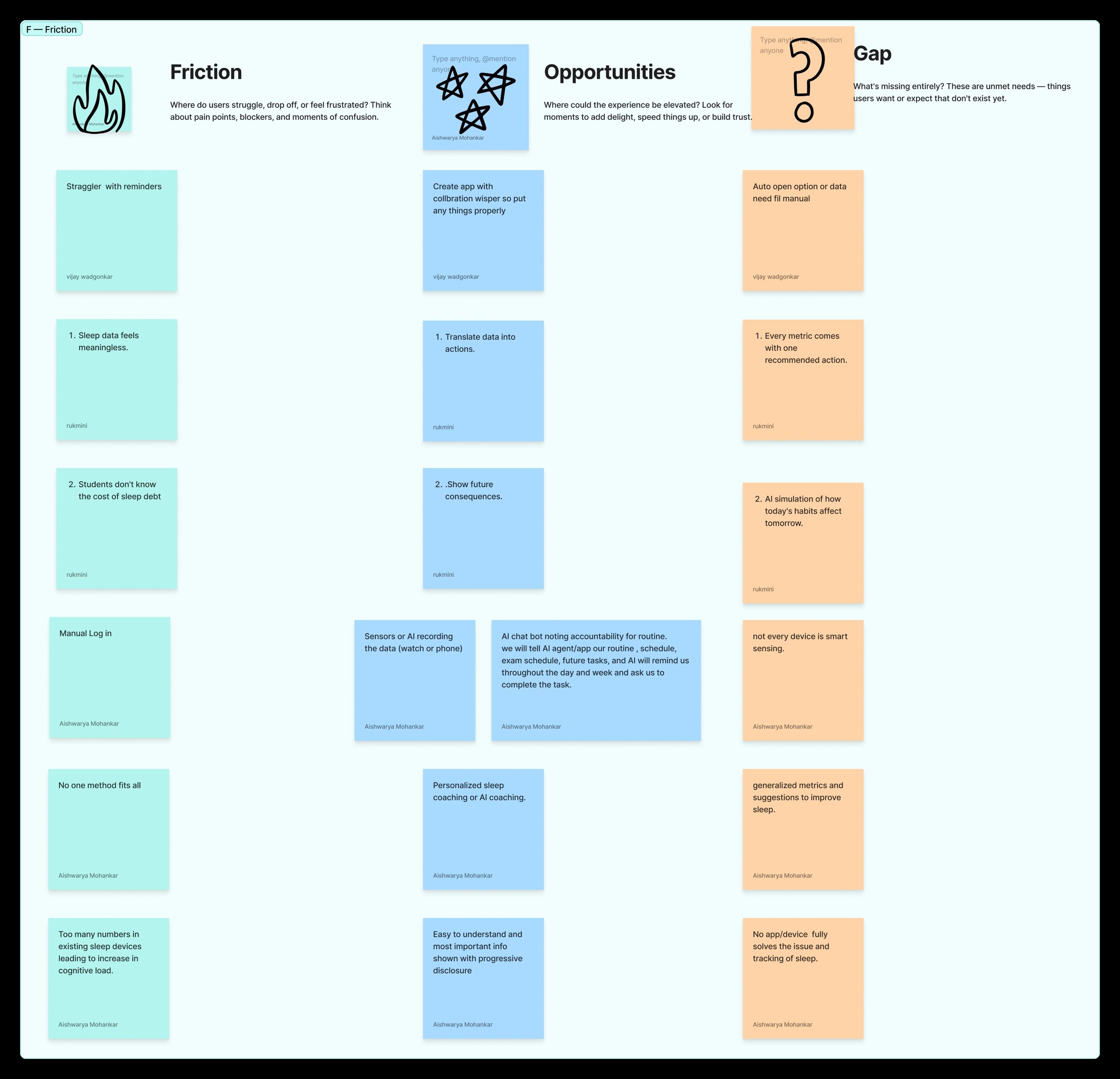
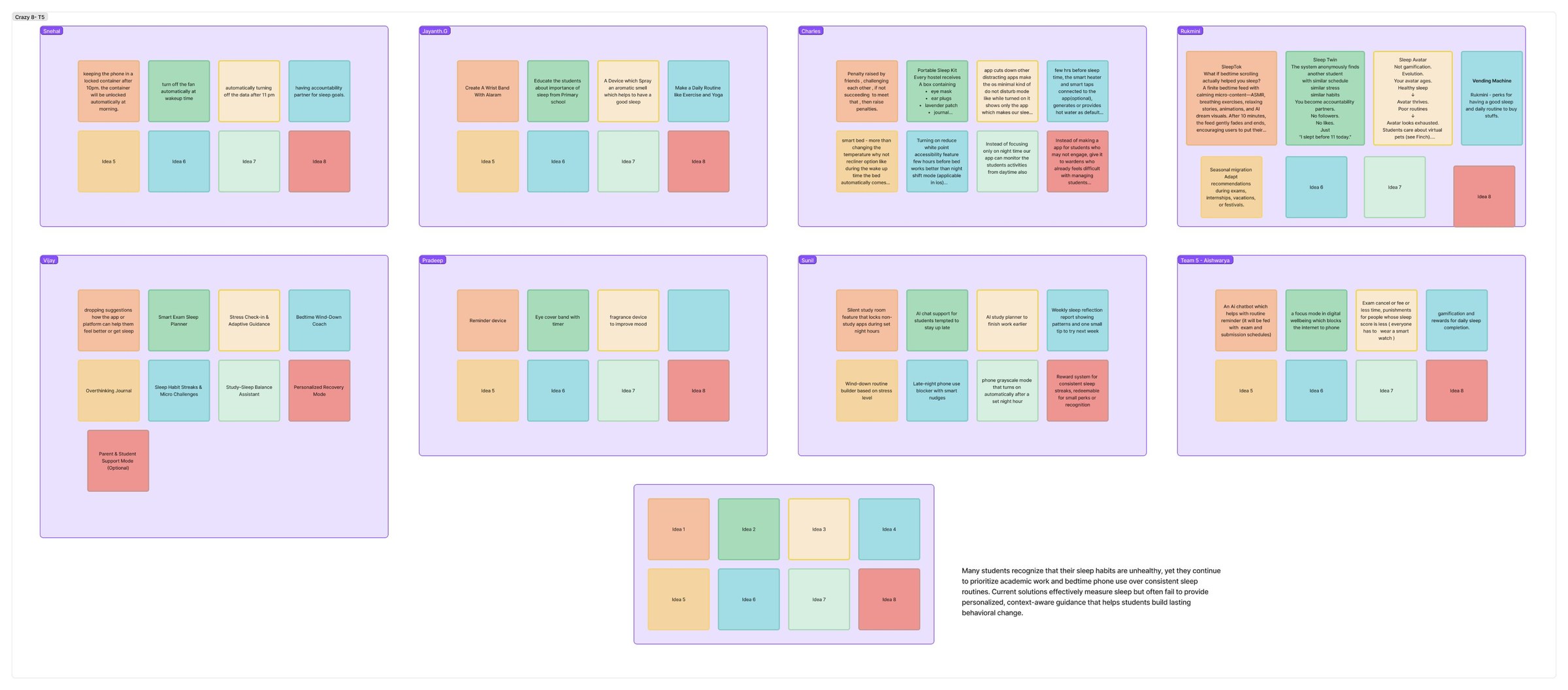
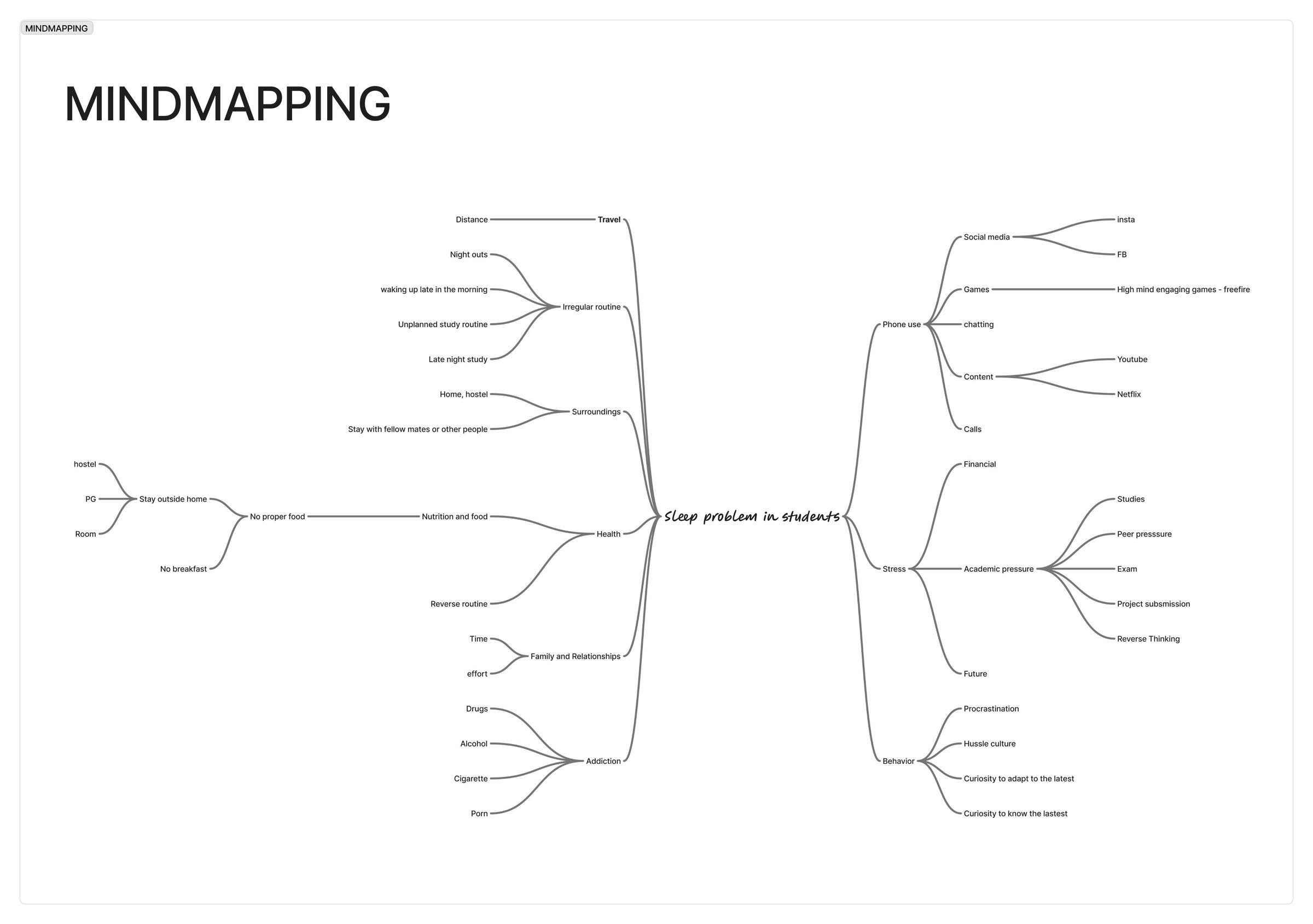
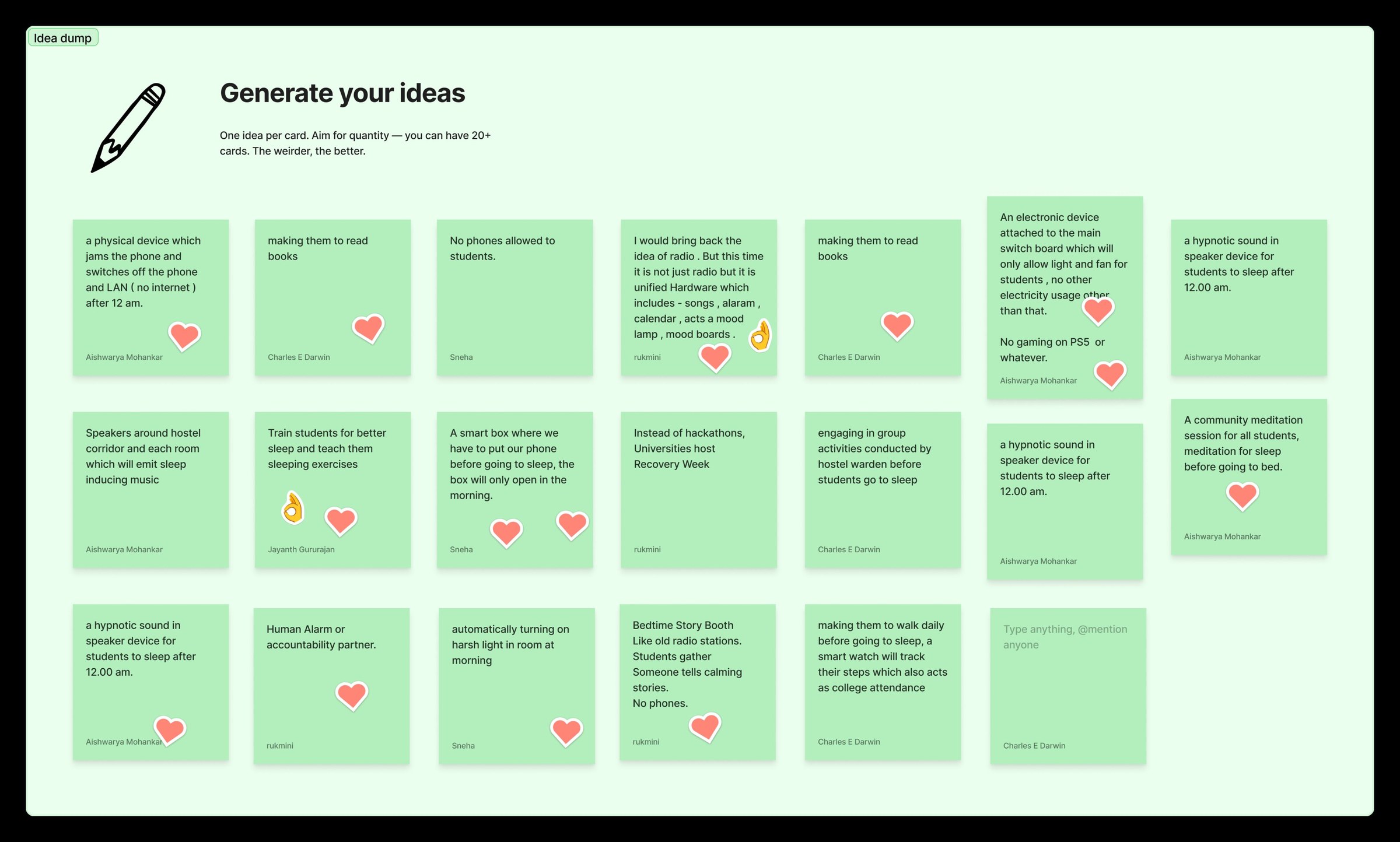
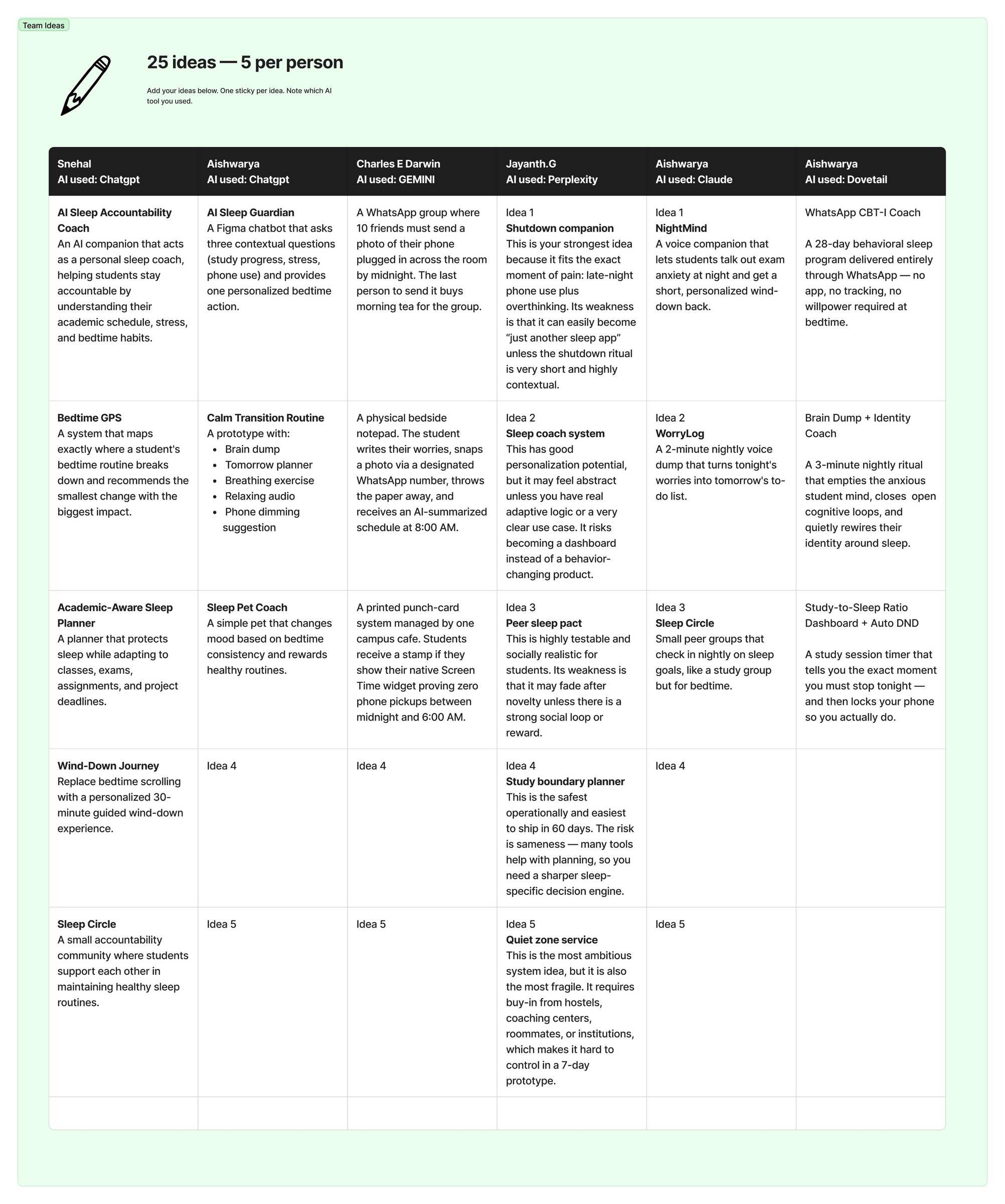
From 80+ ideas to eight merged concepts
- 01Physical phone disengagement
- 02Multisensory wind-down cue
- 03Adaptive sleep modes
- 04Smart sleep-time intervention
- 05Sleep energy matrix
- 06Tactile worry stone
- 07Habit reinforcement
- 08Personal sleep companion
SCAMPER + team voting
Hardware
Unora device
Tactile
Worry stone
Software
Unora app
12Design engineering
A penguin that gives your phone a bedtime.
The Unora device is a bedside phone dock and ambient lamp. Docking the phone starts the wind-down; a contactless breathing sensor estimates sleep so students never log anything.
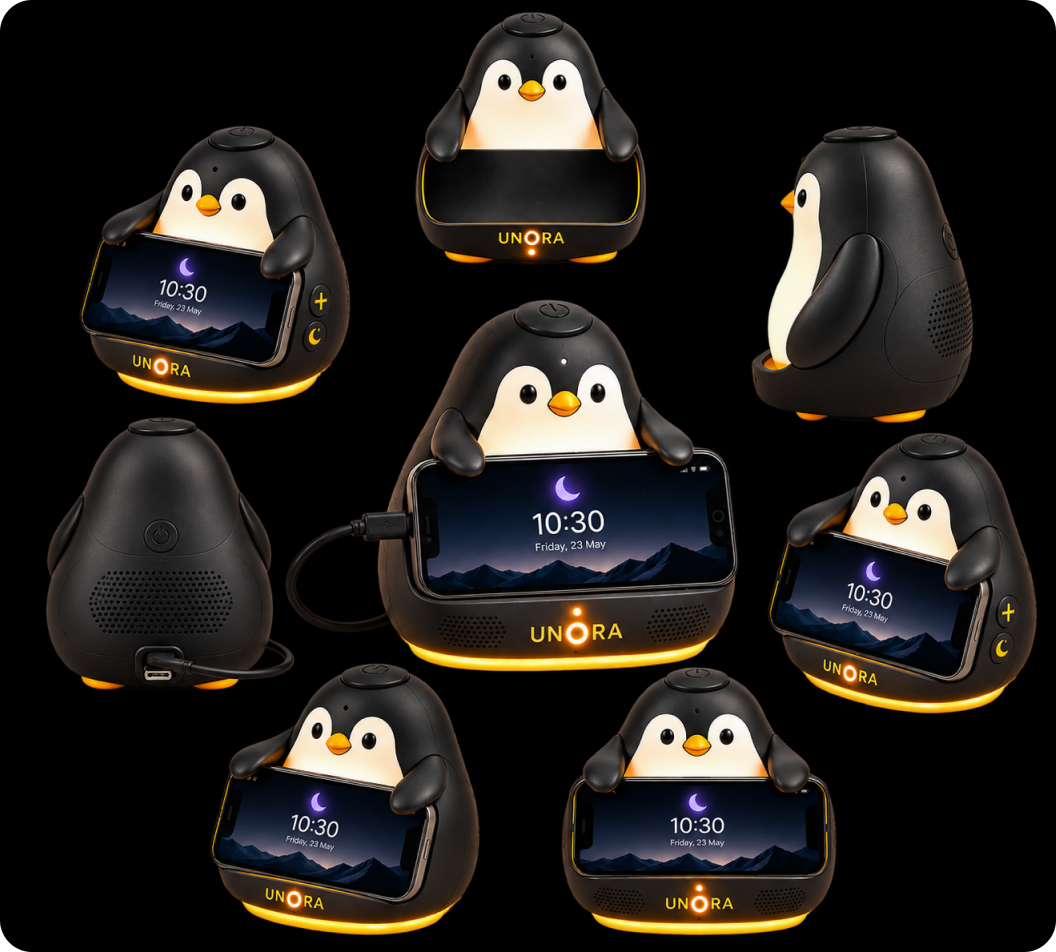
Light states
Warm light moves through normal → wind-down → sleep fade → sunrise.
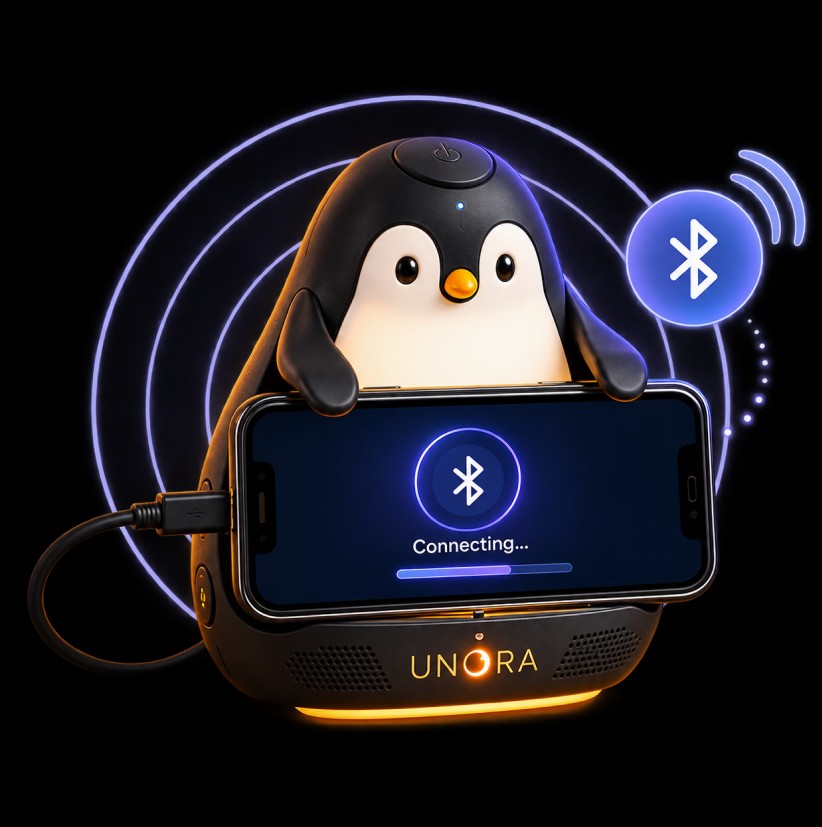
Bluetooth Low Energy
Connects the device to the Unora app with low power consumption.
Speaker
Plays calming sounds and sleep audio directly from the bedside device.
USB-C retractable cable
A universal connection for charging, stored neatly inside the device.
Worry stone
A tactile object for racing thoughts.
Breathing detection sensor
Tracks breathing patterns to support sleep tracking.

13UX architecture
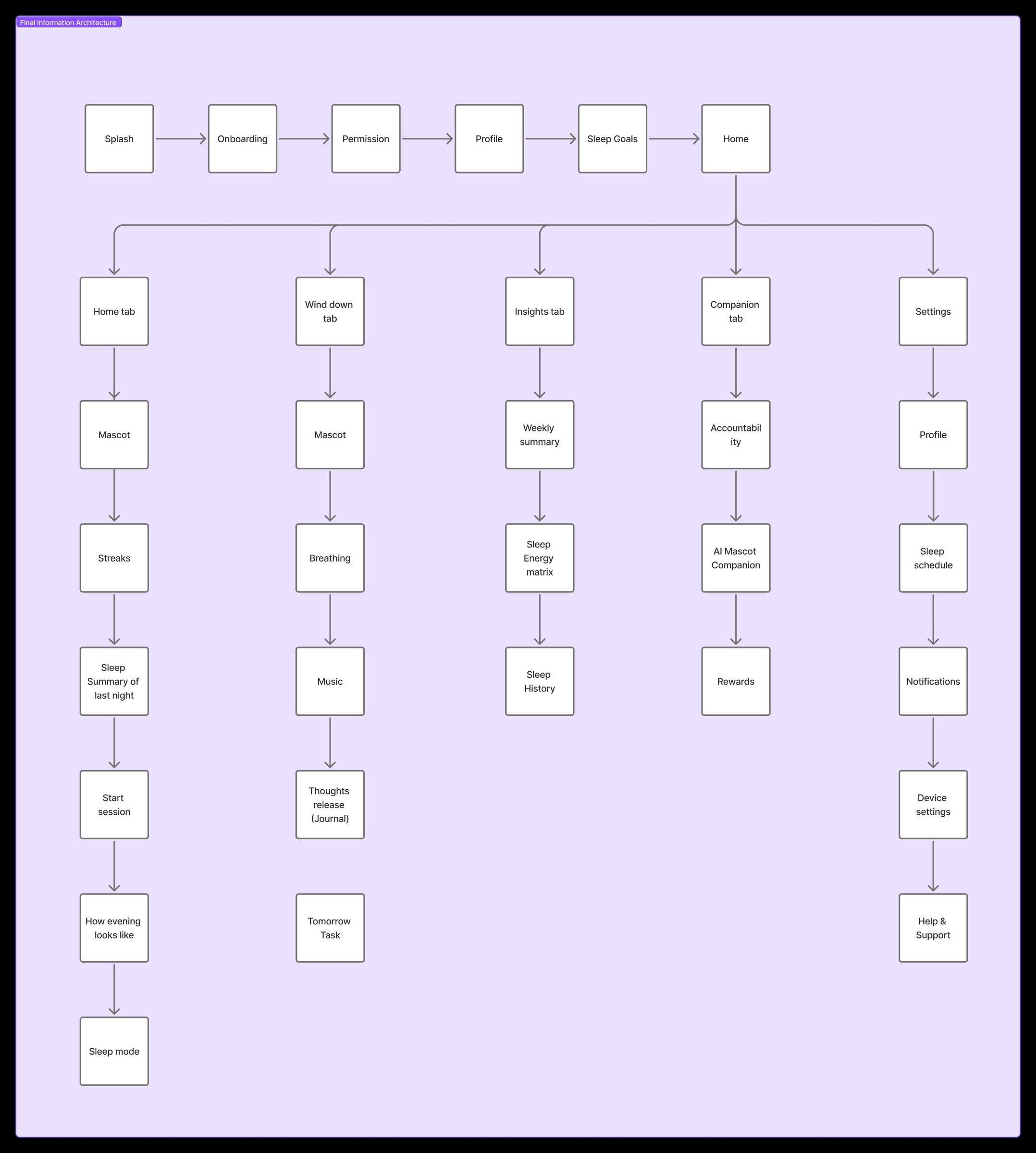
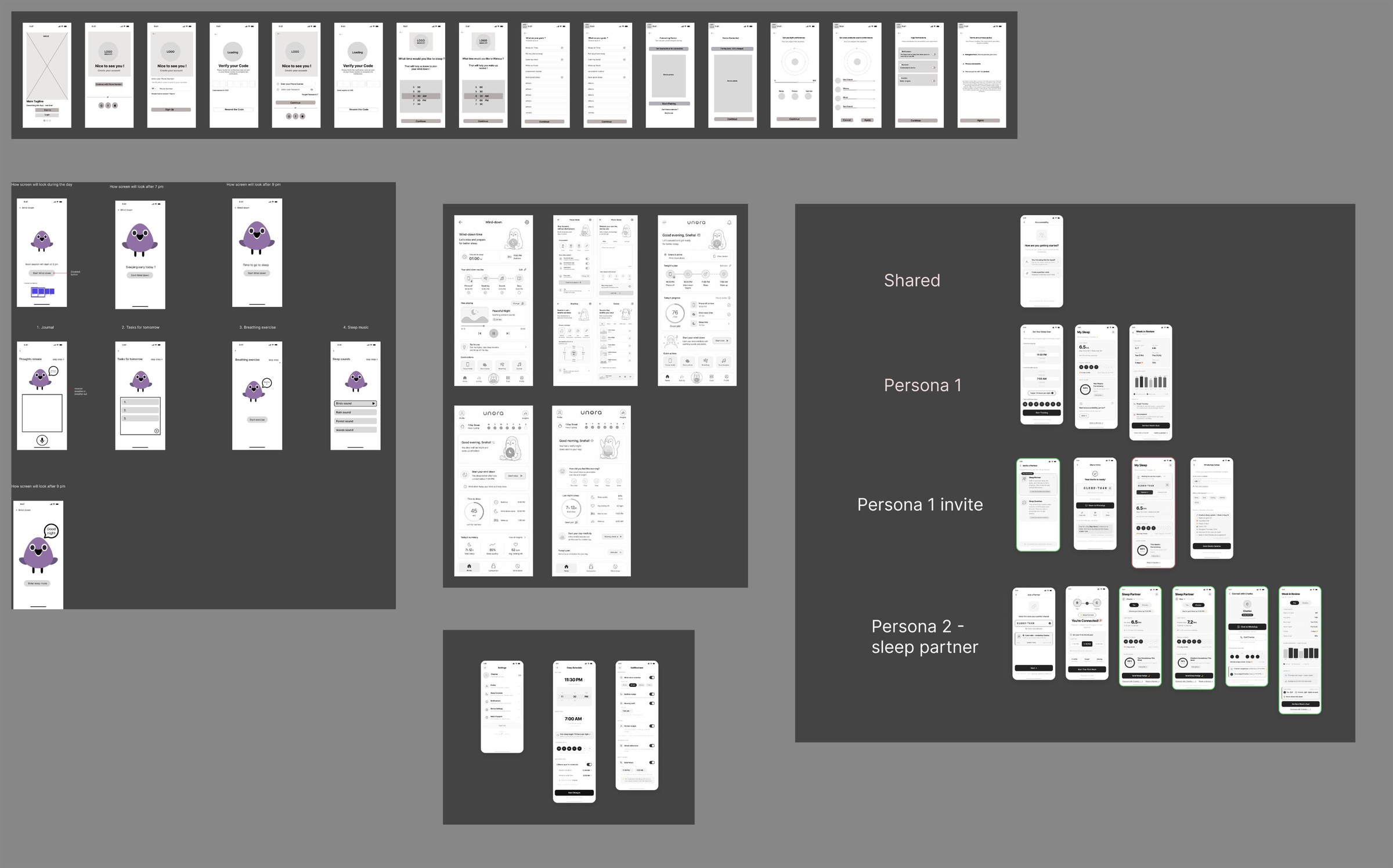
One job per tab, so nothing appears twice.
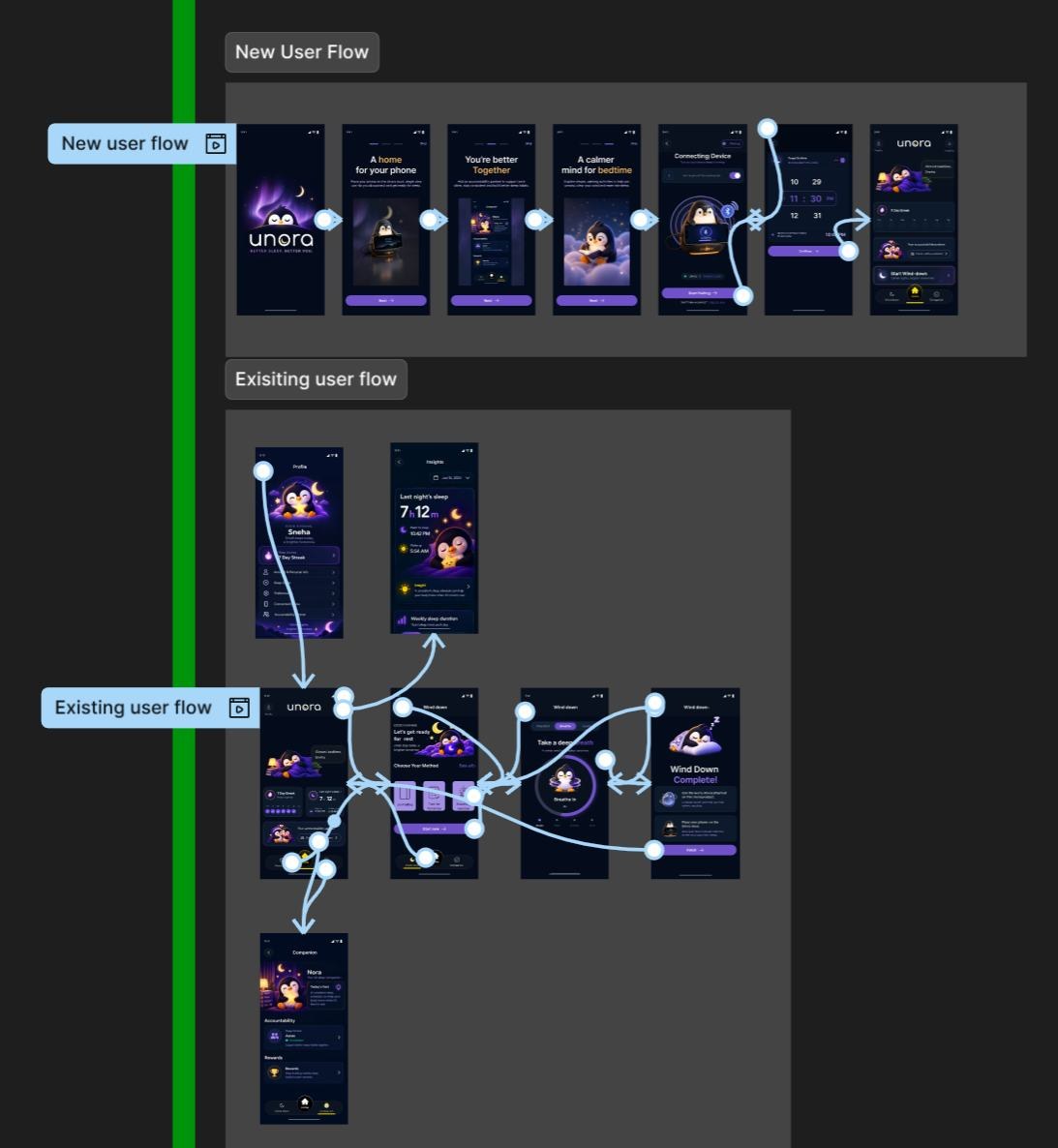
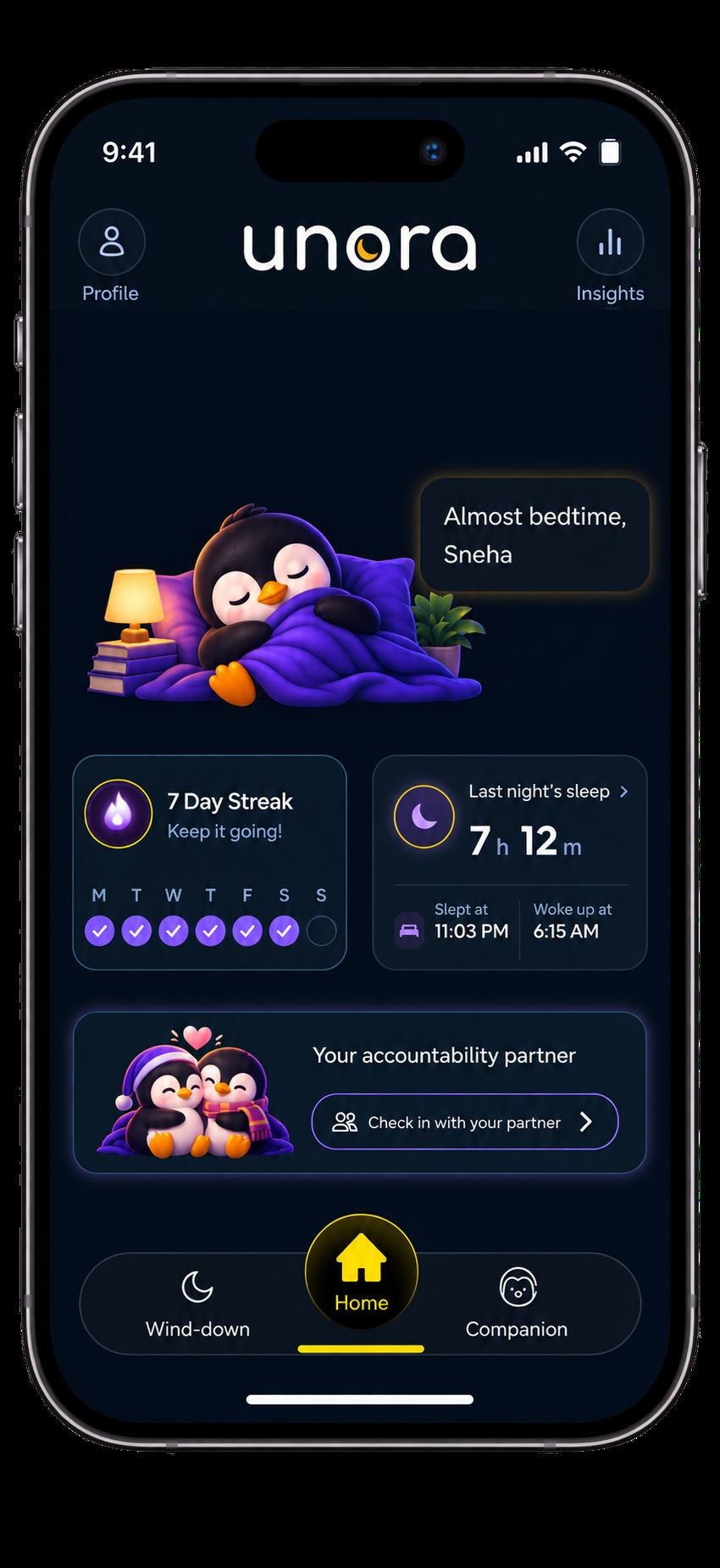
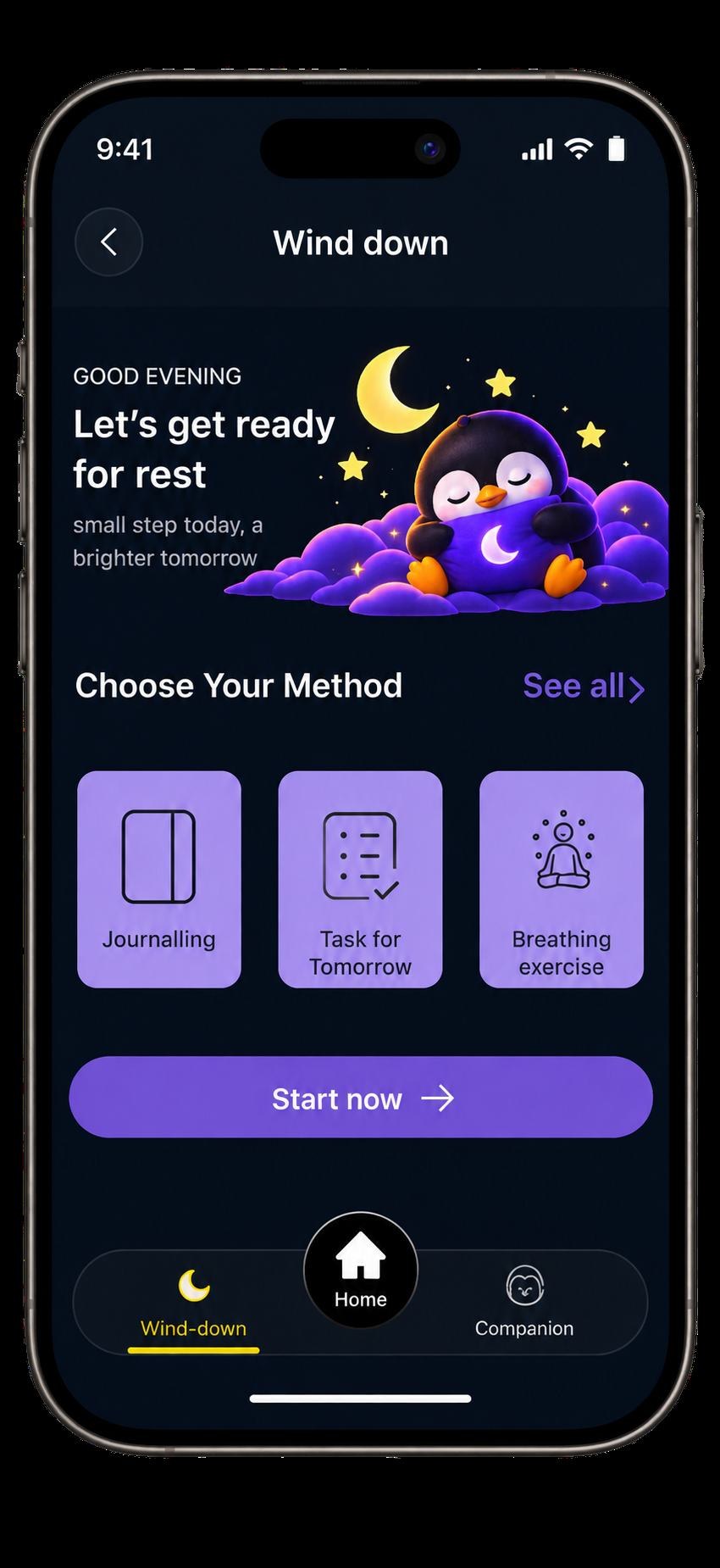
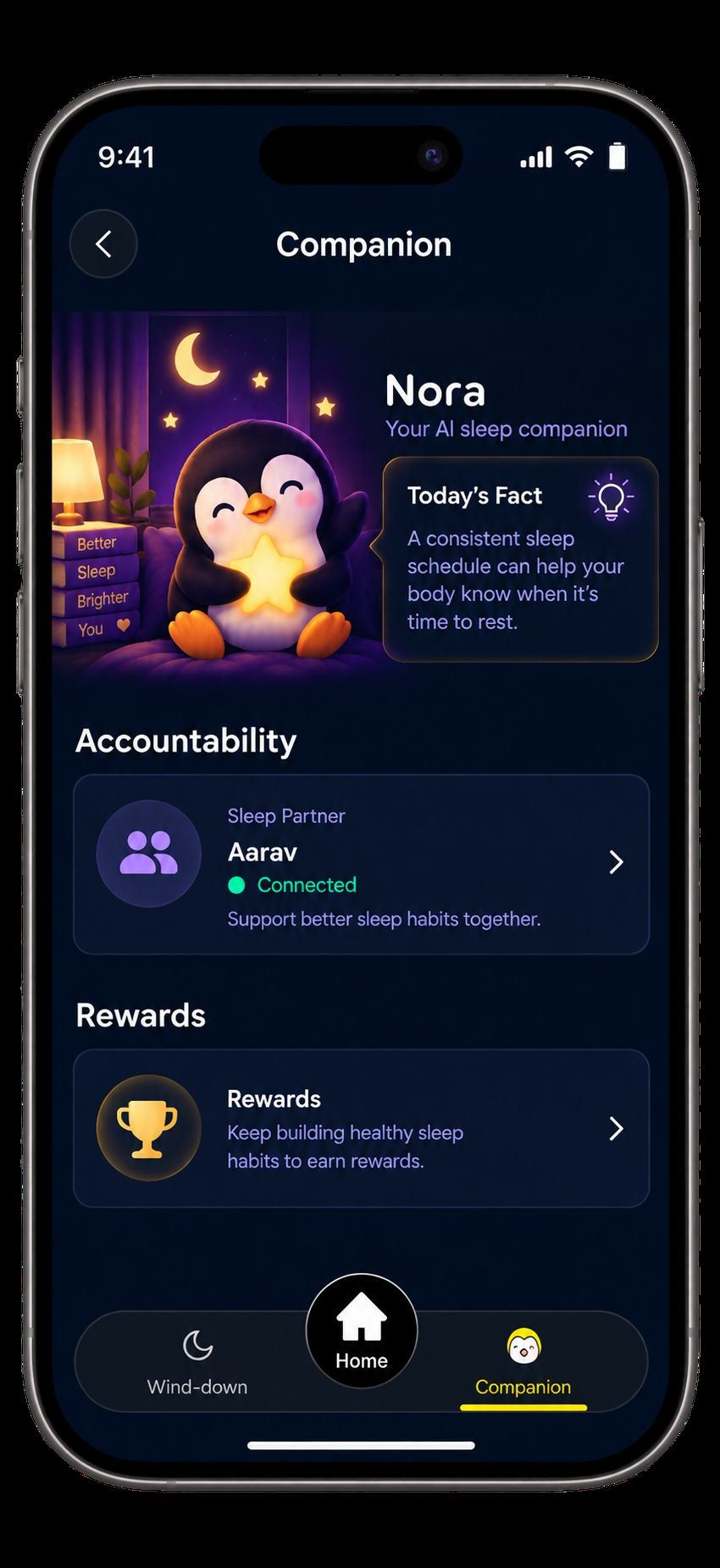
Home, Wind Down and Companion sit in the bottom bar; Insights is a header shortcut and Settings opens from the profile icon.
Tonight's plan
Home
- Nora greeting
- Streak
- Last night
- Start wind-down
One calming action
Wind Down
- Journal
- Tasks for tomorrow
- Breathing
- Sleep sounds
Sleep and next-day energy
Insights
- Last night's sleep
- Weekly duration
- Energy & mood
- Monthly report
Nora and people
Companion
- Nora + daily fact
- Accountability
- Rewards
Setup and settings
Profile
- Account
- Sleep goals
- Preferences
- Connected device
- Accountability partner
14User journey
The same night, with Unora in it.
Every stage of the old loop now meets a feature: a timely nudge, a dock that ends phone time, a wind-down, a partner, and a morning that explains itself.
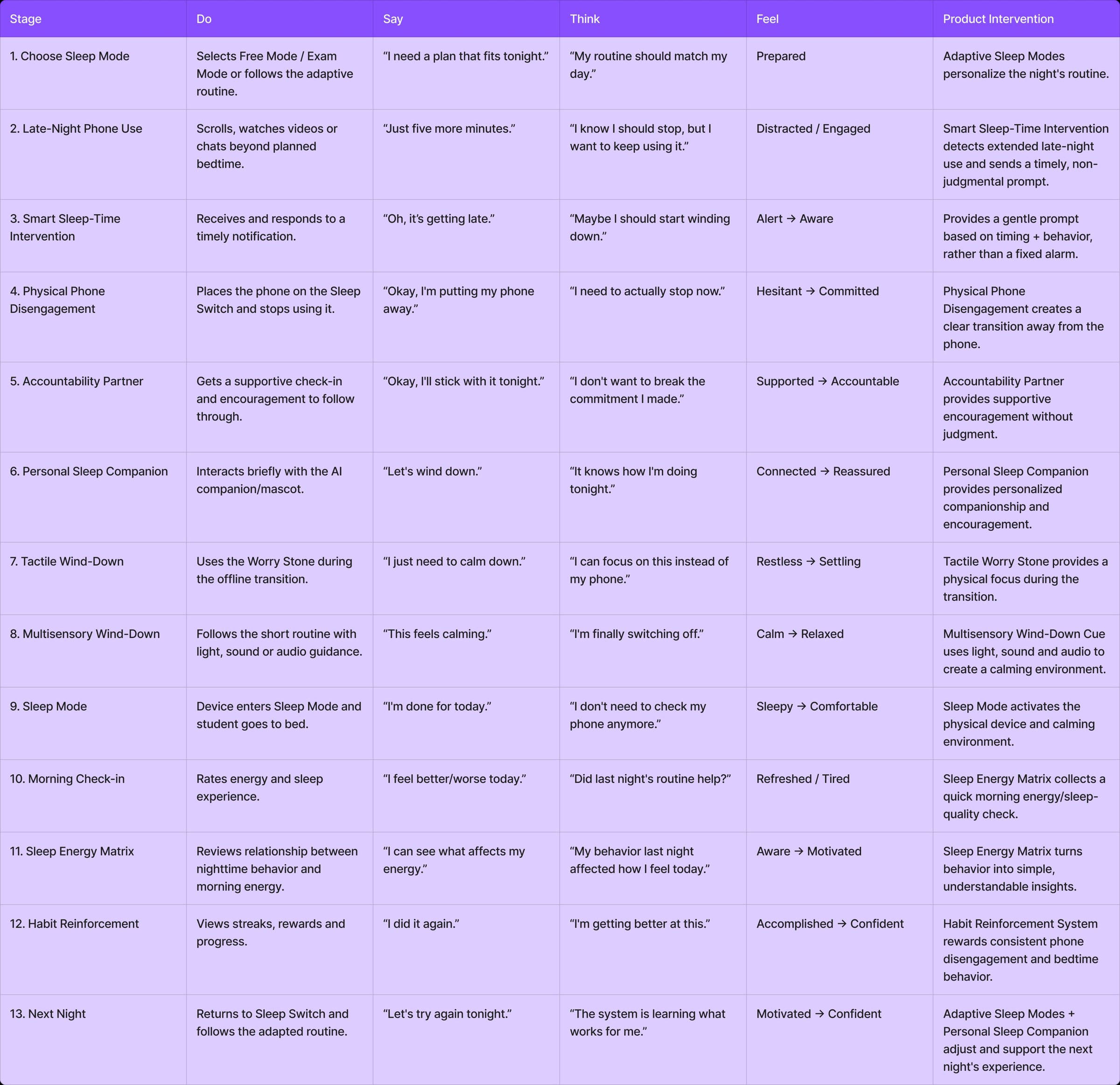
From notification to morning review
The full nightly flow — and then the cycle repeats. The partner never sees raw sleep data, only what the student agrees to share.
- 01Bedtime nudgeNotification when wind-down starts.
- 02Open the appTap the nudge.
- 03How are you feeling?Quick emotion check-in.
- 04Meet NoraDaily fact and gentle guidance.
- 05Choose a methodJournal · tasks · breathing · sounds.
- 06Dock the phoneLamp turns warm amber.
- 07Worry stoneHold it — light turns blue.
- 08Sleep modeLight fades over 15 minutes.
- 09AsleepBreathing sensor estimates sleep.
- 10Sunrise wakeLamp brightens gradually.
- 11Morning check-inHow energetic do you feel?
- 12InsightsSleep linked to next-day energy.
- 13Streak and rewardsSleep Coins for Nora.
- 14Partner updateWeekly review shared with your partner.
Designed for real student life
Ten edge cases, each with a defined response.
Sleeps earlier than planned
Early sleep is celebrated, not penalised. Tomorrow's plan adjusts.
Phone docked, but still awake
The device tracks docking, not sleep. The morning check-in asks how the night went.
Alarm change at the last minute
“Is this really urgent?” — allowed, but limited to a few overrides a month.
Finishes phone use early
“Ready early? Let's start your routine.” Wind-down begins straight away.
Laptop or TV instead of phone
A reminder still arrives. A browser companion is future scope; TV is out of scope.
Phone left on the table
Bluetooth notices it never docked: “Your Unora is waiting.” No forced action.
Sleeping at a relative's place
The device is portable. App-only fallback mode, plus planned cheat days.
Worry stone lost
A spare comes in the set, and support can replace it. The app works without it.
Partner has no app
They become a WhatsApp Sleep Guardian and receive weekly updates instead.
Device offline or flat
The lamp falls back to timer mode; data syncs when it reconnects.
15Testing
A peer critique reshaped the device and the app.
Reviewers from other teams and mentors left Keep, Friction, Question and Opinion notes. Internal reviews then cut features that duplicated tabs or felt like a store.
Keep
Phone holds steadily with a proper grip
Keep
Layout and spacing are solid, minimal info
Friction
USB-C pin depth won't fit thin or cased phones
Friction
Tilt feels like the phone could fall
Opinion
Home and Insights both look stats-driven
Opinion
Add a charging indicator
Question
How is this different from phone sleep tracking?
Question
Can the penguin be customised?
Formal usability testing was not conducted. Everything above is peer and mentor critique, not measured usability results.
16Iteration
What the critique changed.
Challenge, design response, iteration.
Challenge
Nora felt like a feature to buy into
Design response
Customisation shouldn't be a shop.
Iteration
Nora customisation became a rewards wardrobe unlocked by Sleep Coins.
Challenge
Home and Insights both looked stats-driven
Design response
Home should answer “what do I do tonight?”.
Iteration
Home became tonight's plan and actions; the numbers moved to Insights.
Challenge
The dock could feel unstable
Design response
A phone boundary only works if it feels safe.
Iteration
Grip and tilt were flagged for the next physical prototype, with a charging indicator added.
17Visual design system
Deep night navy, calm lavender, warm yellow.
A dark-only system so Unora never glares at bedtime. Inter throughout for legibility; Nora the penguin gives check-ins warmth. One system for the app and the device.
Ten documented tokens
- Base#040B1B
- Surface#08111D
- Card#0D1A2B
- Border#29425F
- Text primary#FFFFFF
- Text secondary#94A3B8
- Purple#6F52C9
- Light purple#D8B4FE
- Yellow#FBE00A
- Gold#FFC740
Type
One family, seven styles
Geometry
Nothing sharp
Accents
Two accent roles
Accessibility
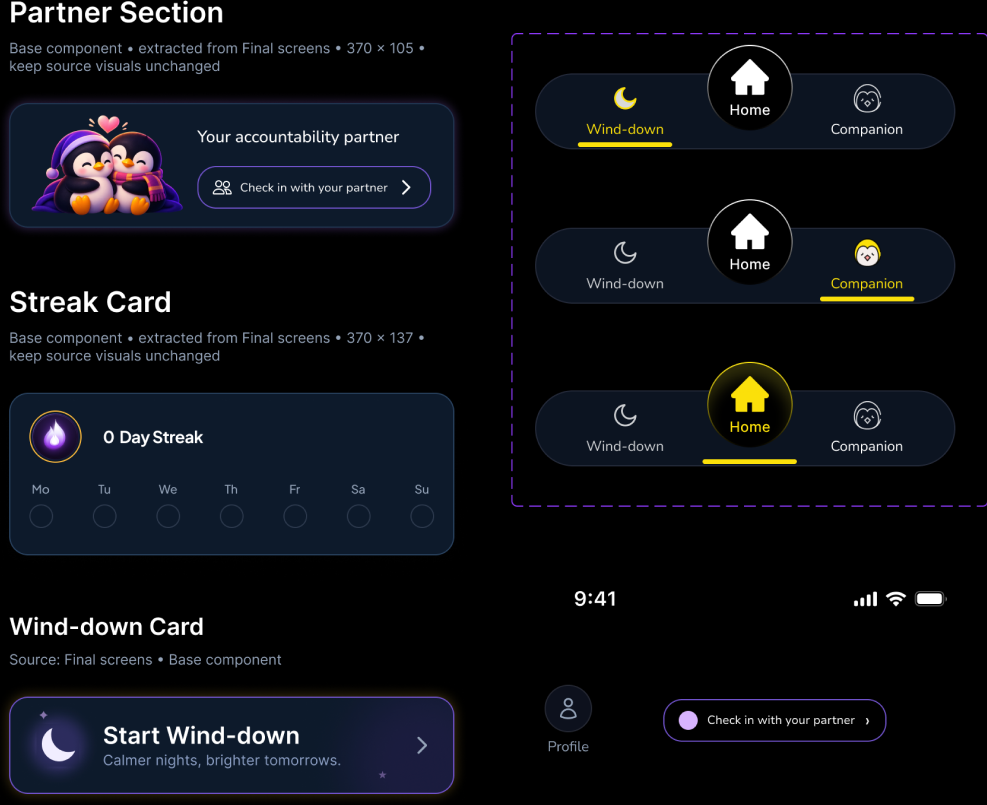
Contrast calculated with the WCAG 2.x formula against our documented tokens. Colour is never the only way a state is shown: the active tab uses a raised circle, a colour change and an underline together.
| Foreground | On base | On card | Reading |
|---|---|---|---|
| Text / Primary #FFFFFF | 19.65:1 | 17.50:1 | Meets 4.5:1 |
| Text / Secondary #94A3B8 | 7.66:1 | 6.83:1 | Meets 4.5:1 |
| Accent / Yellow #FBE00A | 14.75:1 | 13.14:1 | Meets 4.5:1 |
| Accent / Gold #FFC740 | 12.63:1 | 11.25:1 | Meets 4.5:1 |
| Icon / Purple #D8B4FE | 11.11:1 | 9.90:1 | Meets 4.5:1 |
| Accent / Purple #6F52C9 | 3.49:1 | 3.11:1 | Meets 3:1 — large text, icons, outlines |
| Border / Default #29425F | 1.91:1 | 1.70:1 | Below 3:1 — structural edges only |
This is not a complete accessibility audit and has not been tested with users. Touch targets (40 px profile, 64 px navigation, 20 px badge) still need checking in user testing.
18Final solution
Better sleep starts with putting the phone down.
For college students who lose bedtime to their phones, Unora turns the intention to sleep on time into a nightly habit, with support instead of guilt.
Smart nudge
Guided wind-down
Unora device
Accountability
Nora + rewards
Insights
19Product promo video
Unora in motion.
The team's promo video walks through the nightly ritual end to end.
20Mathematics — evidence & metrics
What the literature says, and what we still have to prove.
Published research told us the problem is real and widespread. It cannot tell us whether Unora solves it.
55–80%
Poor sleep quality reported across university-student populations in the reviewed literature.
62.6%
Poor sleep quality among Indian undergraduates in the reviewed research.
72.9%
Poor sleep quality reported among Indian medical students in the reviewed research.
Sources: Sahu et al., “Burnout and Sleep Quality” (PMC4659578), plus our primary interviews.
Success metrics to measure
Defined, not yet collected.
21Impact
Hypothesised impact, stated as such.
Unora is a concept grounded in one well-evidenced behaviour. Its effectiveness is not yet measured.
For the student · hypothesised
- A clear physical stopping point instead of relying on willpower.
- A repeatable wind-down ritual rather than a nightly decision.
- Thoughts offloaded through journaling, breathing or the worry stone.
- Support without guilt — recovery over perfection.
For the business · hypothesised
- A differentiated position: physical + digital, where competitors are digital only.
- Hardware plus app rather than a single subscription surface.
- A route to campus partnerships and group accountability.
- Revenue, conversion and retention figures: to be added.
No business results, retention figures or conversion rates exist for this project. Everything on this page is a design hypothesis.
22Before → after
The same student, two different nights.
Before
“I should sleep, but I keep scrolling.”
- The phone is the default escape.
- Thoughts remain unresolved.
- Bedtime is a decision made again every night.
After
“I know how to start winding down.”
- The phone has a deliberate stopping place.
- Thoughts have somewhere to go.
- Bedtime is a ritual that begins itself.
I don't have to force myself to sleep. I just have to begin the ritual.
23Learnings
Focused beats feature-heavy.
Next, prove it with students.
Learned
Awareness is not the lever
Learned
Cutting is the design work
Learned
A concept must name its limits
Roadmap
Next
- Usability test with 5–6 students + SUS
- Exam Mode for timetables
- Working Unora device prototype
V2
- Reward content & student perks
- Weekend recovery planner
Future
- Campus partnerships
- Group accountability
- Validate breathing-sensor accuracy
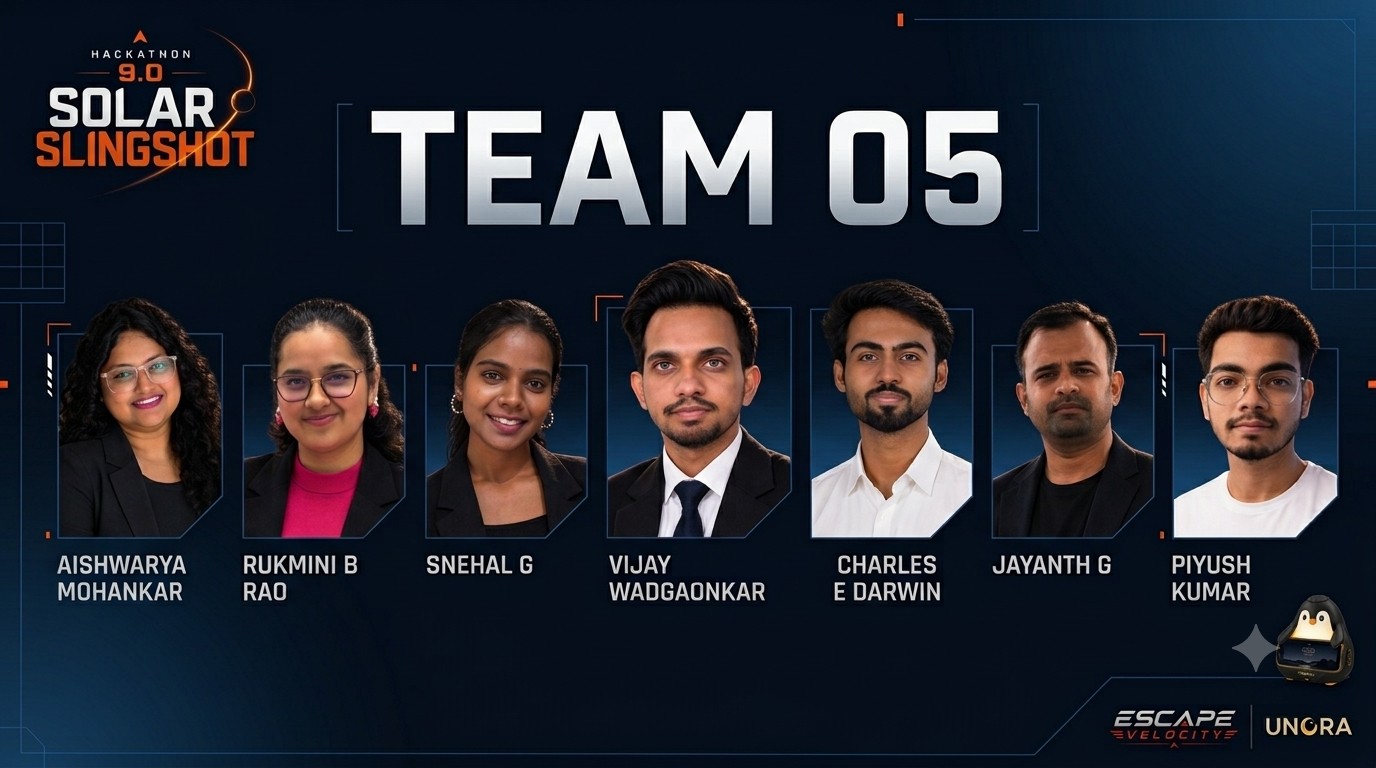
Built with seven people
Aishwarya Mohankar · Charles E Darwin · Jayanth · Piyush Kumar · Rukmini Rao · Snehal G · Vijay Wadgaonkar. We researched, ideated and voted as a team; I led the research synthesis and the app's structure, screens and storytelling.
With thanks to every student and parent who shared their night routine with us, and to Jagadeesh sir and Aravind for guiding the project.
24In short
If you only read one section.
Problem
Intention, not information
My role
Research + product design
Solution
Dock, ritual, companion
Status
Concept, critiqued not tested
Closing
Designing better transitions, not just better screens.